Travel Bug: Alaska by sea: Bears, glaciers and everything in between
Alaska is America’s last wild frontier — and a land of sublime, overwhelming beauty. The 10 highest major peaks in the U.S. are all in Alaska; many places can be reached only by boat or plane. You can’t even drive to Juneau, the state capital.
We sailed in August, on our fourth trip to Alaska, and we weren’t the only repeat visitors. Many of our fellow passengers on Oceania’s Riviera had been coming back for years, chasing glaciers, whales, bears and bald eagles.
Alaska cruises are booming
The obvious draws are wildlife, glaciers, Indigenous culture and adventure. But talking with other passengers, I found other reasons. Many were from Florida, Georgia, Texas, Arizona and Nevada, escaping a brutal summer heat wave. Others were avoiding the cost and hassle of long-haul international flights in favor of a short hop to the West Coast. As one crew member put it, people are tired of flying overseas. Alaska feels closer to home, and plenty of guests simply love cruising, love Alaska and keep coming back to Oceania for the amenities.
We also appreciated the adults-only atmosphere, which skews toward older, wealthier travelers. We joked that Alaska has become a “last chance” cruise: last chance to see the glaciers before they recede, last chance to make the trip while you still can and last chance to spend a chunk of your portfolio on something unforgettable.
Cruising in general appeals to this crowd for practical reasons. You unpack once and the destination comes to you. Ships are built for accessibility, with elevators and staff trained in mobility assistance. Group dining and activities create an easy, built-in social life, medical staff and structured schedules add a sense of safety and one price covers meals, lodging, and entertainment. You see multiple ports without repacking or booking separate hotels, and you can go at your own pace. On a refined, adults-only ship like the Riviera, add a quieter atmosphere — no kids’ clubs, no crowded pools — and the freedom to splurge on a bucket-list trip.
Choosing the Right Ship
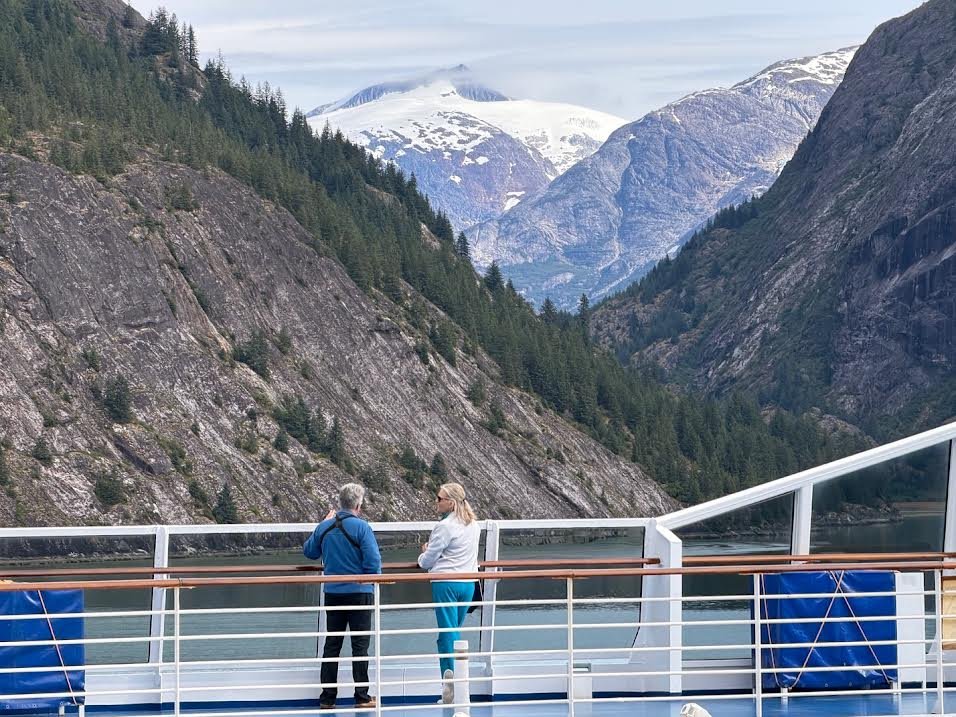
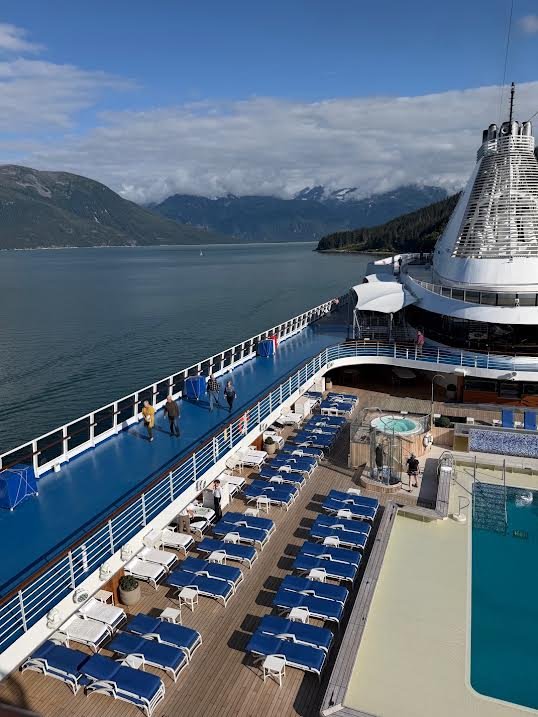
This wasn’t our first Alaska cruise — we’ve sailed here on big ships and small, in spring, summer, and fall — but this time the ship itself made the difference. The Riviera carries up to 1,250 passengers, small by Alaska standards. However, that small size let us sail into places larger ships can’t reach like Disenchantment Bay near Hubbard Glacier, and quieter ports beyond the usual Ketchikan-Skagway-Sitka-Juneau circuit, where four or five mega-ships can crowd a single town’s streets on the same day.
Our 13-day round trip from Seattle ran farther north than usual — to Hubbard Glacier, Icy Strait Point, Holkham Bay Glacier Fjords and Dawes Glacier — before looping back through Prince Rupert and Victoria. Onboard, the crew quickly learned our names and there were always quiet corners — in the library, on deck — to retreat to. Free Starlink Wi-Fi, free specialty restaurants, included gratuities, and shore-excursion credits rounded out the value.
Food is where Oceania sets itself apart. Four specialty restaurants — Jacques (French), Red Ginger (Asian), Polo Grill (steaks and grilled meats), and Toscana (Italian) — are included at no extra charge, plus the Grand Dining Room. Standouts included hot and cold foie gras, lobster thermidor, crispy duck with fresh mint and watermelon salad, perfectly cooked salmon and sea bass in pastry crust, and desserts from chocolate fondant to tiramisu.
Sea days had their own rhythm. Mornings started at the rooftop café, where cheerful Crewmember Anna made a mean cappuccino (and I never turned down the chocolate croissant), followed by a stretch class and a soak in the outdoor Jacuzzi before breakfast. Others opted for room service or headed straight to the gym. For the rest of the day there were lectures, trivia, wine tastings, cooking classes, pickleball, golf, a spa, or a good book in the library.
Highlights
Bear Watching Near Ketchikan
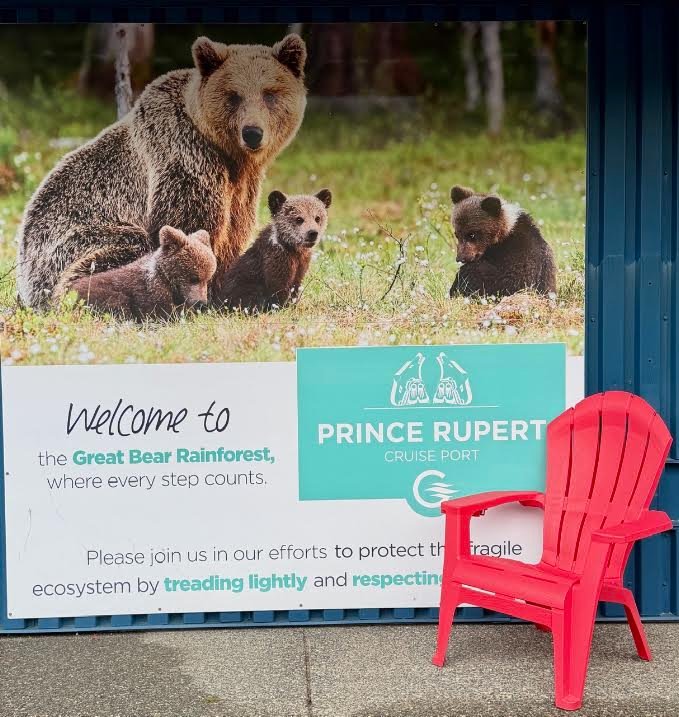
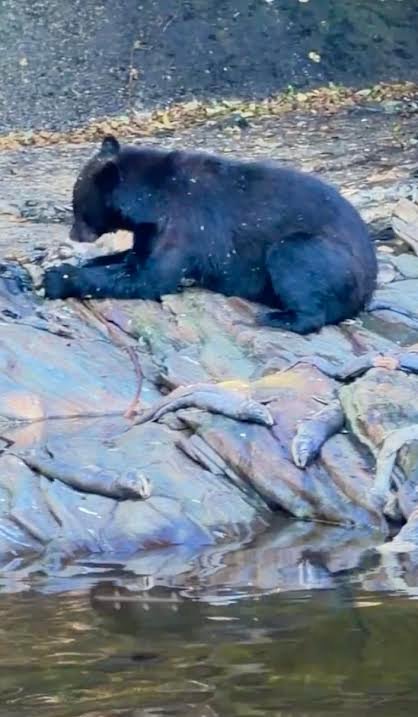
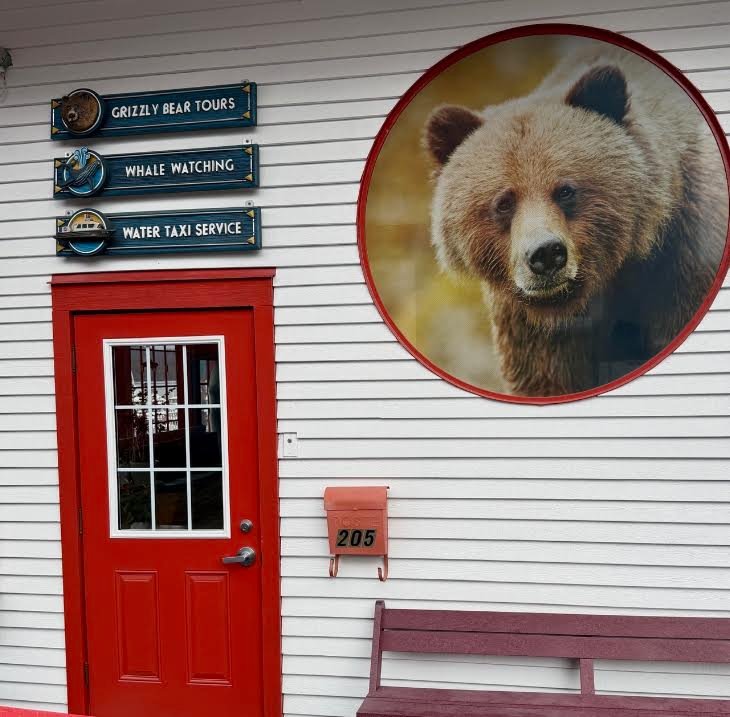
A standout moment came on the full-day excursion to Neets Bay, deep in the Tongass National Forest — America’s largest national forest. After an hour boat ride then a half-hour hike through old-growth spruce and hemlock (a black bear crossed our trail, utterly unbothered), we settled on a platform above a salmon-choked stream. Minutes passed with nothing but rushing water, then two dark shapes emerged from the brush. Bears wading into shallow pools to snatch salmon, favoring the egg-laden females, while eagles waited on the rocks to scavenge the leftovers.
Hubbard Glacier Up Close
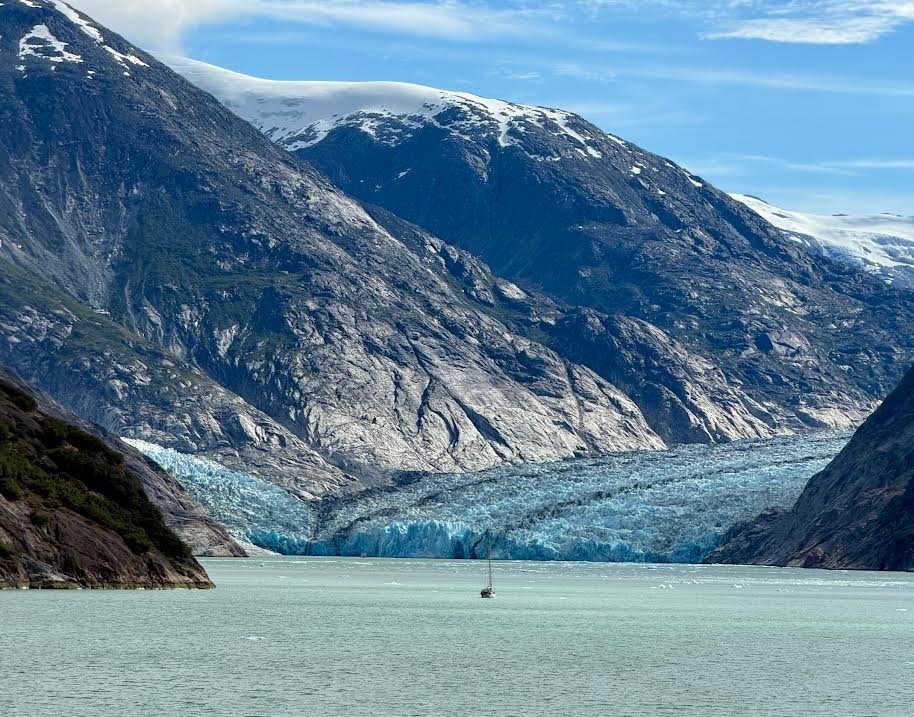
The Riviera‘s size let us sail deep into Disenchantment Bay, something bigger ships can’t do. From there we boarded a small expedition boat that wove through drifting ice to the glacier’s face. Hubbard is the largest tidewater glacier in North America, fed from 76 miles up in the Canadian mountains near Mount Logan. Its terminal face runs seven miles wide and rises 350 feet above the water. Unlike most of Alaska’s glaciers, Hubbard is advancing up to seven feet a day, earning it the nickname “the galloping glacier.”
We drifted past icebergs the size of cars and small houses, crackling and popping as ancient, trapped air escaped, carved by weather and waves into arches and spires, many glowing a startling translucent blue. Closer to the face of the glacier, we watched building-sized chunks of ice calve and crash into the bay — a sight that’s hard to describe and impossible to forget.
Alaska Inside Passage Port by Port
Ketchikan was our first stop, the starting point for the Neets Bay bear-watching excursion described above. Rain falls approximately 200 days a year, turning Creek Street’s stilted buildings into grey ghosts of the gold rush brothels and shops they once were. Ketchikan was built on salmon, timber, the gold rush and the kind of rain that makes locals shrug and just call if “liquid sunshine.”
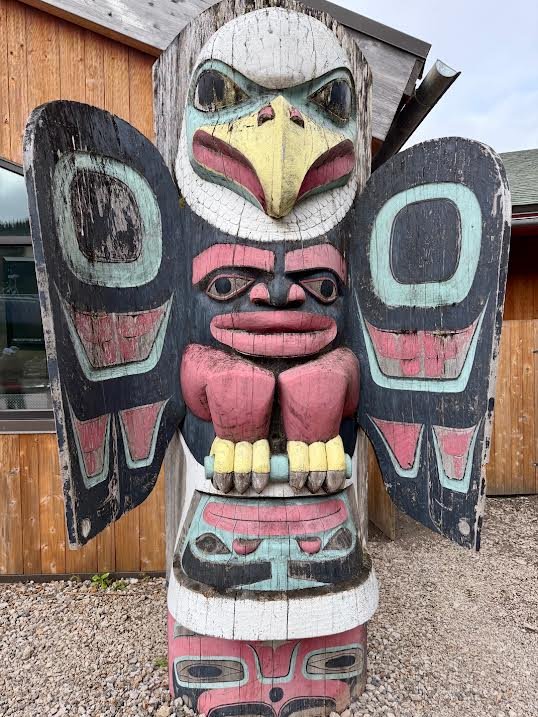
Sitka was our second stop on Baranof Island. Sitka blends Tlingit culture with visible traces of its Russian colonial past. A short walk from the dock led to Sitka National Historical Park, where a totem pole trail winds through coastal rainforest to the site of the 1804 Battle of Sitka, the park’s small museum and history film were well worth the stop.
After cruising to Hubbard Glacier we docked at Icy Strait Point, near Hoonah. This stop felt far quieter and more authentic than the bigger ports — a restored 1930s salmon cannery now holding shops, local eateries, and a small but excellent museum, staffed largely by local Tlingit residents. It’s one of Alaska’s best spots for whale watching (other passengers saw humpbacks bubble-net feeding), and thrill-seekers can ride one of the world’s longest ziplines. We walked the rainforest trail on a crew member’s tip, passing a bald eagle nest six feet across, their whistles echoing overhead.
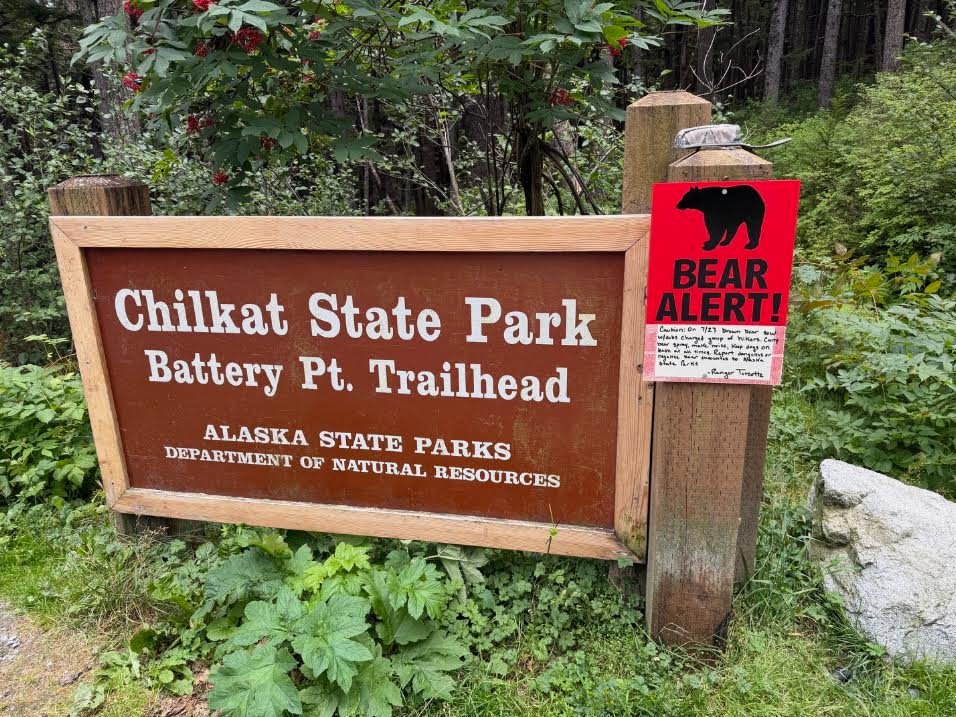
Our next stop was Haines. It sits ringed by glacially carved mountains and hosts roughly 400 resident bald eagles, a number that swells past 3,500 each fall for the late chum salmon run. We walked a coastal path with beach viewpoints known for bears and moose, though a trailhead warning about a recent bear encounter sent us back to the ship early. That evening, two bald eagles shuttled between the piers as we watched from our balcony.
We then cruised to Juneau, Alaska’s scenic capital, tucked between the Gastineau Channel and the steep slopes of the Coast Mountains. It is so isolated it’s only reachable by boat or plane with me roads connecting it to the rest of the state. It blends small town government vibes with cruise port bustle. A short drive out of town, we hiked toward Mendenhall Glacier and spotted a mother bear with two cubs in a tree just off the trail.
Wrangell, our next port, is one of Alaska’s oldest towns. Wrangell is the only Alaskan town to have flown four flags, Tlingit, Russian, British, and American. Wrangell sees far fewer cruise ships than its neighbors. We hiked the Mt. Dewey Trail for harbor views.
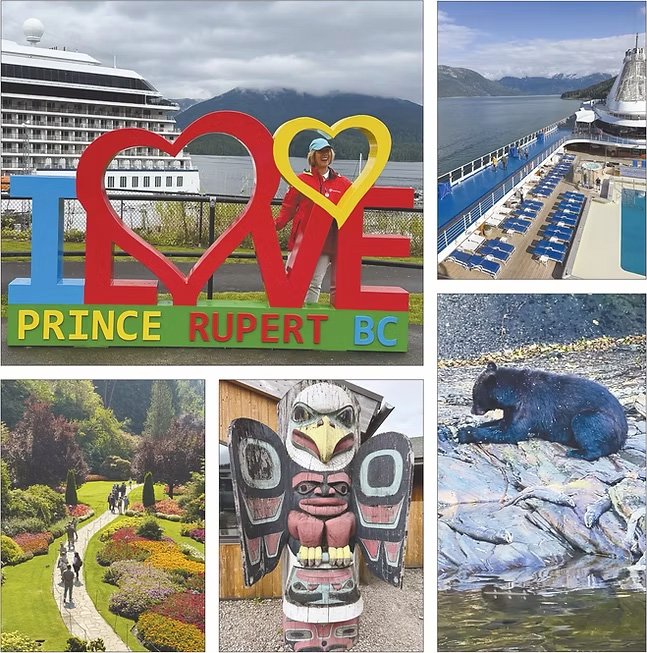
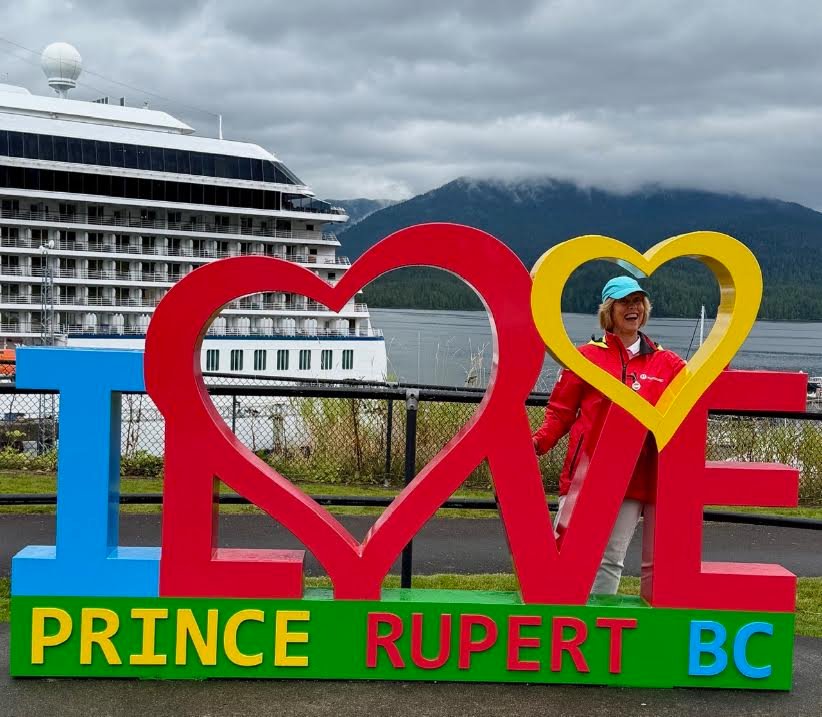
Next was Prince Rupert, British Columbia, tucked into the province’s misty northern coast. From the dock it’s an easy walk to the Museum of Northern British Columbia’s First Nations art collection and the colorful, historic Cow Bay waterfront, with short excursions available into the surrounding fjords to search for grizzlies, humpbacks, and eagles.
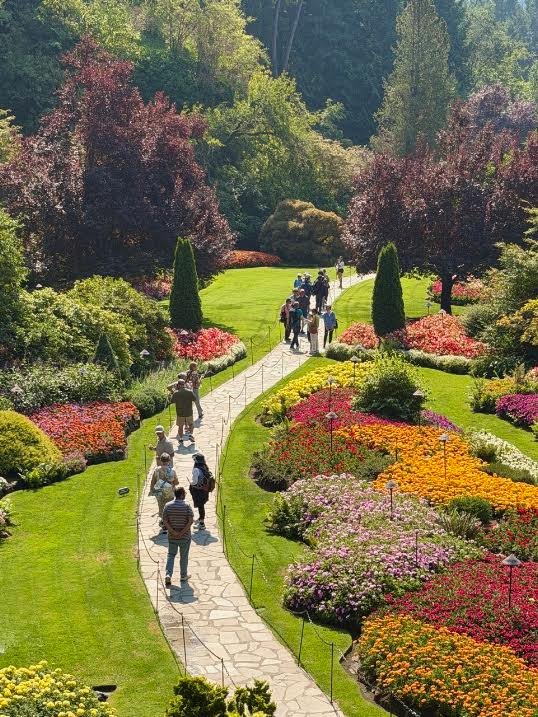
Victoria, British Columbia closed out the trip with a visit to Butchart Gardens, fifty acres of themed plantings — a formal Italian Garden, a serene Japanese Garden with koi ponds, and a Rose Garden set inside an old limestone quarry that Jennie Butchart began planting in 1904. Summer brings over a million blooms and Saturday-night fireworks; it’s a place you can tour in an afternoon and remember for years.
Four trips in, Alaska hasn’t gotten smaller or more familiar — if anything, sailing farther north this time only showed us how much more of it there is left to see.